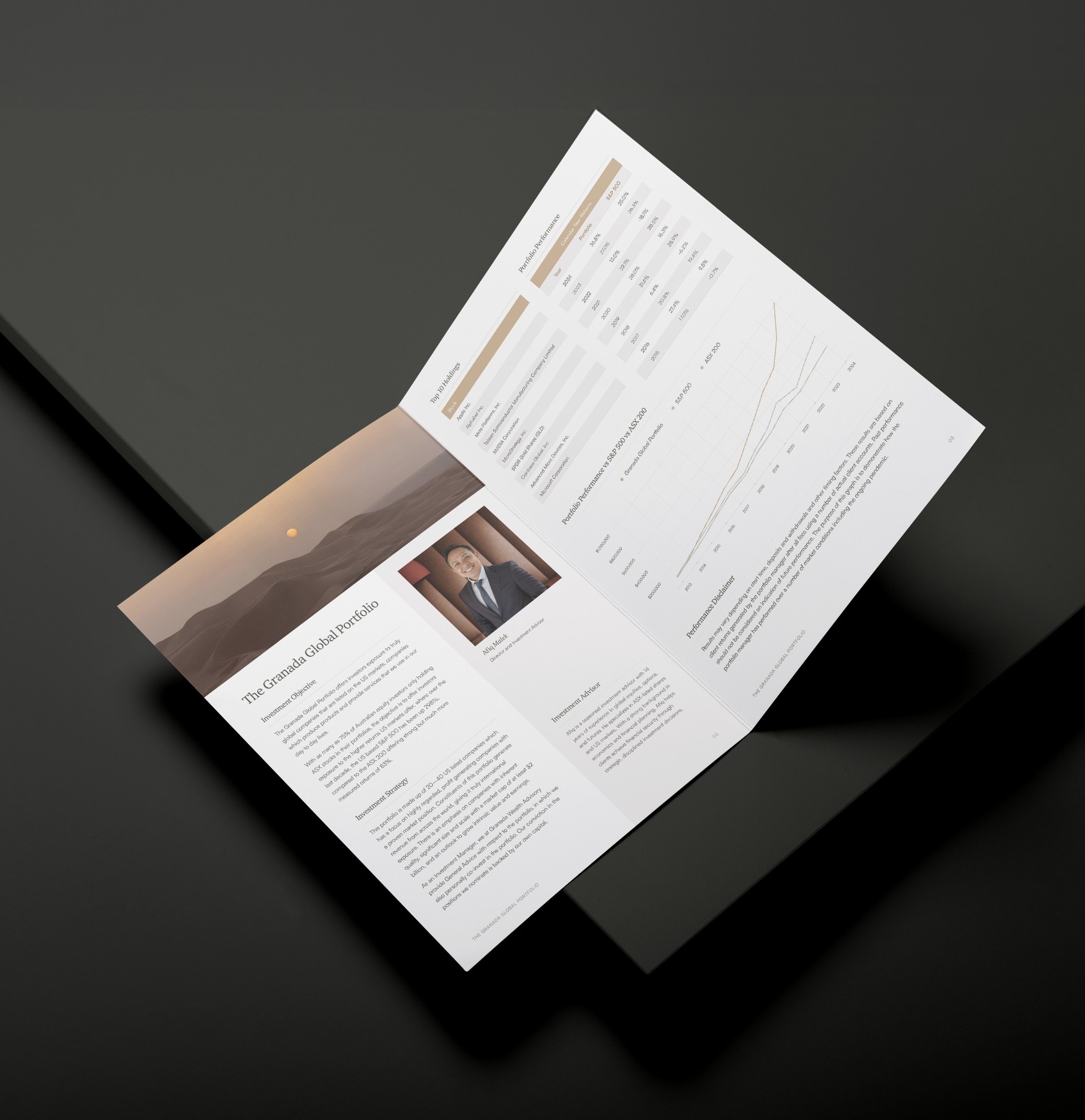



The Framework Behind Portfolios That Stand the Test of Time
The principles, structure, and discipline that help portfolios perform through every market cycle.



Most portfolios do not fail because of bad investments.
They fail because they were never built with a framework.
Markets change. Life changes. Emotions show up at the worst possible times.
Portfolios that last are not the ones chasing the highest returns. They are the ones designed to survive reality.
This article breaks down the framework behind portfolios that continue to work through booms, downturns, and everything in between.
What “Standing the Test of Time” Actually Means
A resilient portfolio does not aim to win every year.
It aims to keep you invested, confident, and financially secure over decades.
That means a portfolio must do four things well:
Grow wealth over the long term
Protect against permanent loss
Provide income when needed
Reduce the risk of emotional decision-making
If any one of these fails, the strategy eventually breaks.
What “Standing the Test of Time” Actually Means
A resilient portfolio does not aim to win every year.
It aims to keep you invested, confident, and financially secure over decades.
That means a portfolio must do four things well:
Grow wealth over the long term
Protect against permanent loss
Provide income when needed
Reduce the risk of emotional decision-making
If any one of these fails, the strategy eventually breaks.
What “Standing the Test of Time” Actually Means
A resilient portfolio does not aim to win every year.
It aims to keep you invested, confident, and financially secure over decades.
That means a portfolio must do four things well:
Grow wealth over the long term
Protect against permanent loss
Provide income when needed
Reduce the risk of emotional decision-making
If any one of these fails, the strategy eventually breaks.
What “Standing the Test of Time” Actually Means
A resilient portfolio does not aim to win every year.
It aims to keep you invested, confident, and financially secure over decades.
That means a portfolio must do four things well:
Grow wealth over the long term
Protect against permanent loss
Provide income when needed
Reduce the risk of emotional decision-making
If any one of these fails, the strategy eventually breaks.
The Hidden Risk Most Investors Miss
Volatility is not the real risk.
Behaviour is.
Research consistently shows that investors underperform the very funds they invest in, simply because they buy and sell at the wrong times.
The problem is not intelligence.
It is stress.
A strong framework is designed to reduce the chance that fear, panic, or overconfidence hijacks your decisions.
The Hidden Risk Most Investors Miss
Volatility is not the real risk.
Behaviour is.
Research consistently shows that investors underperform the very funds they invest in, simply because they buy and sell at the wrong times.
The problem is not intelligence.
It is stress.
A strong framework is designed to reduce the chance that fear, panic, or overconfidence hijacks your decisions.
The Hidden Risk Most Investors Miss
Volatility is not the real risk.
Behaviour is.
Research consistently shows that investors underperform the very funds they invest in, simply because they buy and sell at the wrong times.
The problem is not intelligence.
It is stress.
A strong framework is designed to reduce the chance that fear, panic, or overconfidence hijacks your decisions.
The Hidden Risk Most Investors Miss
Volatility is not the real risk.
Behaviour is.
Research consistently shows that investors underperform the very funds they invest in, simply because they buy and sell at the wrong times.
The problem is not intelligence.
It is stress.
A strong framework is designed to reduce the chance that fear, panic, or overconfidence hijacks your decisions.
The Three Layers of a Durable Portfolio
Portfolios that endure are built in layers, not as a single pool of money.
Layer 1: Stability
This layer exists to protect lifestyle and short-term needs.
It prioritises:
Capital preservation
Liquidity
Lower volatility
This is what prevents forced selling during market downturns.
Layer 2: Growth
This layer is designed for long-term compounding.
It accepts:
Market fluctuations
Temporary drawdowns
Longer time horizons
This is where wealth is built, not accessed.
Layer 3: Flexibility
This layer allows the portfolio to adapt as life changes.
It supports:
Tax efficiency
Income timing
Strategic withdrawals
Without flexibility, even a well-performing portfolio can become inefficient.
The Three Layers of a Durable Portfolio
Portfolios that endure are built in layers, not as a single pool of money.
Layer 1: Stability
This layer exists to protect lifestyle and short-term needs.
It prioritises:
Capital preservation
Liquidity
Lower volatility
This is what prevents forced selling during market downturns.
Layer 2: Growth
This layer is designed for long-term compounding.
It accepts:
Market fluctuations
Temporary drawdowns
Longer time horizons
This is where wealth is built, not accessed.
Layer 3: Flexibility
This layer allows the portfolio to adapt as life changes.
It supports:
Tax efficiency
Income timing
Strategic withdrawals
Without flexibility, even a well-performing portfolio can become inefficient.
The Three Layers of a Durable Portfolio
Portfolios that endure are built in layers, not as a single pool of money.
Layer 1: Stability
This layer exists to protect lifestyle and short-term needs.
It prioritises:
Capital preservation
Liquidity
Lower volatility
This is what prevents forced selling during market downturns.
Layer 2: Growth
This layer is designed for long-term compounding.
It accepts:
Market fluctuations
Temporary drawdowns
Longer time horizons
This is where wealth is built, not accessed.
Layer 3: Flexibility
This layer allows the portfolio to adapt as life changes.
It supports:
Tax efficiency
Income timing
Strategic withdrawals
Without flexibility, even a well-performing portfolio can become inefficient.
The Three Layers of a Durable Portfolio
Portfolios that endure are built in layers, not as a single pool of money.
Layer 1: Stability
This layer exists to protect lifestyle and short-term needs.
It prioritises:
Capital preservation
Liquidity
Lower volatility
This is what prevents forced selling during market downturns.
Layer 2: Growth
This layer is designed for long-term compounding.
It accepts:
Market fluctuations
Temporary drawdowns
Longer time horizons
This is where wealth is built, not accessed.
Layer 3: Flexibility
This layer allows the portfolio to adapt as life changes.
It supports:
Tax efficiency
Income timing
Strategic withdrawals
Without flexibility, even a well-performing portfolio can become inefficient.
Why Asset Allocation Matters More Than Asset Selection
One of the most consistent findings in investment research is that asset allocation explains the majority of long-term outcomes, not individual investment choices.
In simple terms:
What you own, and in what proportion, matters more than picking the “best” investment.
Example: Portfolio Outcomes Over Time
Portfolio Type | Expected Volatility | Long-Term Role |
|---|---|---|
Defensive | Low | Capital protection, income stability |
Balanced | Medium | Growth with smoother returns |
Growth | Higher | Long-term wealth accumulation |
The right mix depends on timeframe, income needs, and emotional tolerance, not headlines.
Why Asset Allocation Matters More Than Asset Selection
One of the most consistent findings in investment research is that asset allocation explains the majority of long-term outcomes, not individual investment choices.
In simple terms:
What you own, and in what proportion, matters more than picking the “best” investment.
Example: Portfolio Outcomes Over Time
Portfolio Type | Expected Volatility | Long-Term Role |
|---|---|---|
Defensive | Low | Capital protection, income stability |
Balanced | Medium | Growth with smoother returns |
Growth | Higher | Long-term wealth accumulation |
The right mix depends on timeframe, income needs, and emotional tolerance, not headlines.
Why Asset Allocation Matters More Than Asset Selection
One of the most consistent findings in investment research is that asset allocation explains the majority of long-term outcomes, not individual investment choices.
In simple terms:
What you own, and in what proportion, matters more than picking the “best” investment.
Example: Portfolio Outcomes Over Time
Portfolio Type | Expected Volatility | Long-Term Role |
|---|---|---|
Defensive | Low | Capital protection, income stability |
Balanced | Medium | Growth with smoother returns |
Growth | Higher | Long-term wealth accumulation |
The right mix depends on timeframe, income needs, and emotional tolerance, not headlines.
Why Asset Allocation Matters More Than Asset Selection
One of the most consistent findings in investment research is that asset allocation explains the majority of long-term outcomes, not individual investment choices.
In simple terms:
What you own, and in what proportion, matters more than picking the “best” investment.
Example: Portfolio Outcomes Over Time
Portfolio Type | Expected Volatility | Long-Term Role |
|---|---|---|
Defensive | Low | Capital protection, income stability |
Balanced | Medium | Growth with smoother returns |
Growth | Higher | Long-term wealth accumulation |
The right mix depends on timeframe, income needs, and emotional tolerance, not headlines.
Risk Is Not a Number. It Is a Feeling.
Risk questionnaires often reduce risk to a score.
In reality, risk is experienced emotionally.
A portfolio that looks good on paper but feels unbearable during downturns will eventually be abandoned.
A sustainable portfolio balances:
Mathematical risk
Psychological comfort
Real-world behaviour
This is why discipline matters more than optimism.
Risk Is Not a Number. It Is a Feeling.
Risk questionnaires often reduce risk to a score.
In reality, risk is experienced emotionally.
A portfolio that looks good on paper but feels unbearable during downturns will eventually be abandoned.
A sustainable portfolio balances:
Mathematical risk
Psychological comfort
Real-world behaviour
This is why discipline matters more than optimism.
Risk Is Not a Number. It Is a Feeling.
Risk questionnaires often reduce risk to a score.
In reality, risk is experienced emotionally.
A portfolio that looks good on paper but feels unbearable during downturns will eventually be abandoned.
A sustainable portfolio balances:
Mathematical risk
Psychological comfort
Real-world behaviour
This is why discipline matters more than optimism.
Risk Is Not a Number. It Is a Feeling.
Risk questionnaires often reduce risk to a score.
In reality, risk is experienced emotionally.
A portfolio that looks good on paper but feels unbearable during downturns will eventually be abandoned.
A sustainable portfolio balances:
Mathematical risk
Psychological comfort
Real-world behaviour
This is why discipline matters more than optimism.
The Role of Rebalancing (And Why It Feels Wrong)
Rebalancing is one of the least exciting and most powerful disciplines in investing.
It requires:
Trimming assets that have performed well
Adding to assets that feel uncomfortable
This feels counterintuitive in the moment.
Over time, it systematically reinforces buying low and selling high.
Portfolios without rebalancing slowly drift into unintended risk.
The Role of Rebalancing (And Why It Feels Wrong)
Rebalancing is one of the least exciting and most powerful disciplines in investing.
It requires:
Trimming assets that have performed well
Adding to assets that feel uncomfortable
This feels counterintuitive in the moment.
Over time, it systematically reinforces buying low and selling high.
Portfolios without rebalancing slowly drift into unintended risk.
The Role of Rebalancing (And Why It Feels Wrong)
Rebalancing is one of the least exciting and most powerful disciplines in investing.
It requires:
Trimming assets that have performed well
Adding to assets that feel uncomfortable
This feels counterintuitive in the moment.
Over time, it systematically reinforces buying low and selling high.
Portfolios without rebalancing slowly drift into unintended risk.
The Role of Rebalancing (And Why It Feels Wrong)
Rebalancing is one of the least exciting and most powerful disciplines in investing.
It requires:
Trimming assets that have performed well
Adding to assets that feel uncomfortable
This feels counterintuitive in the moment.
Over time, it systematically reinforces buying low and selling high.
Portfolios without rebalancing slowly drift into unintended risk.
Income Changes Everything
Portfolios designed only for growth often struggle once income is required.
Income introduces new challenges:
Sequence of returns risk
Tax timing
Withdrawal sustainability
A portfolio that stands the test of time evolves from accumulation mode to distribution mode without being rebuilt from scratch.
That transition is where many strategies fail.
Income Changes Everything
Portfolios designed only for growth often struggle once income is required.
Income introduces new challenges:
Sequence of returns risk
Tax timing
Withdrawal sustainability
A portfolio that stands the test of time evolves from accumulation mode to distribution mode without being rebuilt from scratch.
That transition is where many strategies fail.
Income Changes Everything
Portfolios designed only for growth often struggle once income is required.
Income introduces new challenges:
Sequence of returns risk
Tax timing
Withdrawal sustainability
A portfolio that stands the test of time evolves from accumulation mode to distribution mode without being rebuilt from scratch.
That transition is where many strategies fail.
Income Changes Everything
Portfolios designed only for growth often struggle once income is required.
Income introduces new challenges:
Sequence of returns risk
Tax timing
Withdrawal sustainability
A portfolio that stands the test of time evolves from accumulation mode to distribution mode without being rebuilt from scratch.
That transition is where many strategies fail.
Tax Is Not a Side Consideration
Tax does not show up in performance charts, but it shows up in outcomes.
Over decades, small differences in tax efficiency can materially change how long money lasts.
A strong framework considers:
Where assets are held
When income is drawn
How gains are realised
Ignoring tax is equivalent to accepting a permanent drag on returns.
Tax Is Not a Side Consideration
Tax does not show up in performance charts, but it shows up in outcomes.
Over decades, small differences in tax efficiency can materially change how long money lasts.
A strong framework considers:
Where assets are held
When income is drawn
How gains are realised
Ignoring tax is equivalent to accepting a permanent drag on returns.
Tax Is Not a Side Consideration
Tax does not show up in performance charts, but it shows up in outcomes.
Over decades, small differences in tax efficiency can materially change how long money lasts.
A strong framework considers:
Where assets are held
When income is drawn
How gains are realised
Ignoring tax is equivalent to accepting a permanent drag on returns.
Tax Is Not a Side Consideration
Tax does not show up in performance charts, but it shows up in outcomes.
Over decades, small differences in tax efficiency can materially change how long money lasts.
A strong framework considers:
Where assets are held
When income is drawn
How gains are realised
Ignoring tax is equivalent to accepting a permanent drag on returns.
The Discipline That Actually Matters
The most successful portfolios are not managed daily.
They are governed by clear rules.
Those rules answer questions like:
When do we rebalance?
When do we adjust risk?
When do we ignore noise?
When do we reassess assumptions?
This removes guesswork during emotional moments.
Consistency beats brilliance.
The Discipline That Actually Matters
The most successful portfolios are not managed daily.
They are governed by clear rules.
Those rules answer questions like:
When do we rebalance?
When do we adjust risk?
When do we ignore noise?
When do we reassess assumptions?
This removes guesswork during emotional moments.
Consistency beats brilliance.
The Discipline That Actually Matters
The most successful portfolios are not managed daily.
They are governed by clear rules.
Those rules answer questions like:
When do we rebalance?
When do we adjust risk?
When do we ignore noise?
When do we reassess assumptions?
This removes guesswork during emotional moments.
Consistency beats brilliance.
The Discipline That Actually Matters
The most successful portfolios are not managed daily.
They are governed by clear rules.
Those rules answer questions like:
When do we rebalance?
When do we adjust risk?
When do we ignore noise?
When do we reassess assumptions?
This removes guesswork during emotional moments.
Consistency beats brilliance.
Why This Framework Works Across Market Cycles
Markets move through fear, optimism, euphoria, and correction.
A durable portfolio does not try to predict these cycles.
It assumes they will happen.
By combining structure, diversification, discipline, and flexibility, the framework is designed to function whether markets are calm or chaotic.
That is what allows investors to stay invested long enough for compounding to do its job.
Why This Framework Works Across Market Cycles
Markets move through fear, optimism, euphoria, and correction.
A durable portfolio does not try to predict these cycles.
It assumes they will happen.
By combining structure, diversification, discipline, and flexibility, the framework is designed to function whether markets are calm or chaotic.
That is what allows investors to stay invested long enough for compounding to do its job.
Why This Framework Works Across Market Cycles
Markets move through fear, optimism, euphoria, and correction.
A durable portfolio does not try to predict these cycles.
It assumes they will happen.
By combining structure, diversification, discipline, and flexibility, the framework is designed to function whether markets are calm or chaotic.
That is what allows investors to stay invested long enough for compounding to do its job.
Why This Framework Works Across Market Cycles
Markets move through fear, optimism, euphoria, and correction.
A durable portfolio does not try to predict these cycles.
It assumes they will happen.
By combining structure, diversification, discipline, and flexibility, the framework is designed to function whether markets are calm or chaotic.
That is what allows investors to stay invested long enough for compounding to do its job.
Final Perspective
Portfolios that stand the test of time are not built for markets.
They are built for people.
They acknowledge uncertainty.
They plan for change.
They reduce stress when decisions matter most.
The goal is not to maximise returns in any single year.
The goal is to arrive at the future you want, with confidence and control.
That is what a real investment framework delivers.
Final Perspective
Portfolios that stand the test of time are not built for markets.
They are built for people.
They acknowledge uncertainty.
They plan for change.
They reduce stress when decisions matter most.
The goal is not to maximise returns in any single year.
The goal is to arrive at the future you want, with confidence and control.
That is what a real investment framework delivers.
Final Perspective
Portfolios that stand the test of time are not built for markets.
They are built for people.
They acknowledge uncertainty.
They plan for change.
They reduce stress when decisions matter most.
The goal is not to maximise returns in any single year.
The goal is to arrive at the future you want, with confidence and control.
That is what a real investment framework delivers.
Final Perspective
Portfolios that stand the test of time are not built for markets.
They are built for people.
They acknowledge uncertainty.
They plan for change.
They reduce stress when decisions matter most.
The goal is not to maximise returns in any single year.
The goal is to arrive at the future you want, with confidence and control.
That is what a real investment framework delivers.
Disclaimer:
This article has been prepared by Granada Wealth Advisory and is intended to provide general information of an educational nature only. It does not take into account your objectives, financial situation, or needs and should not be relied upon as personal financial advice.
Any views expressed are general in nature and may not be suitable for your individual circumstances. Before making any financial decisions, you should consider whether the information is appropriate to your situation and seek independent professional advice, including financial, legal, and tax advice where appropriate.
While every effort has been made to ensure the information contained in this article is accurate and up to date at the time of publication, information may change and Granada Wealth Advisory makes no representations or warranties as to the ongoing accuracy or completeness of the content.
No part of this article may be reproduced, distributed, or copied without prior written permission from Granada Wealth Advisory.
For further information about our services, including our Financial Services Guide and how we provide advice, please visit granadawa.com.au or contact Granada Wealth Advisory directly.

More Helpful Articles.


Inside Look at ‘The Granda Global Portfolio’
A deep dive into our diversified approach designed to help your money work harder over time.

Resources & Guides
Our Best Resources,
No Gatekeeping.
The same tools and thinking we share with our clients. From portfolios to guides, everything here is designed to give you clarity and confidence on your wealth-building journey.
Resources & Guides
Our Best Resources,
No Gatekeeping.
The same tools and thinking we share with our clients. From portfolios to guides, everything here is designed to give you clarity and confidence on your wealth-building journey.
Resources & Guides
Our Best Resources,
No Gatekeeping.
The same tools and thinking we share with our clients. From portfolios to guides, everything here is designed to give you clarity and confidence on your wealth-building journey.
Resources & Guides
Others Promise, We Deliver.
The same tools and thinking we share with our clients. From portfolios to guides, everything here is designed to give you clarity and confidence on your wealth-building journey.
Frequently Asked Questions
Granada Help Centre.
Most Asked
Getting Started
Process & Fees
How do I get started with Granada Wealth Advisory?
What does a financial planner actually do? How do they help?
Why should I work with a financial planner?
How are financial planners regulated in Australia?
How do financial planners charge for their services?
How often should I meet with my financial planner?
Frequently Asked Questions
Granada Help Centre.
Most Asked
Getting Started
Process & Fees
How do I get started with Granada Wealth Advisory?
What does a financial planner actually do? How do they help?
Why should I work with a financial planner?
How are financial planners regulated in Australia?
How do financial planners charge for their services?
How often should I meet with my financial planner?
Frequently Asked Questions
Granada Help Centre.
Most Asked
Getting Started
Process & Fees
How do I get started with Granada Wealth Advisory?
What does a financial planner actually do? How do they help?
Why should I work with a financial planner?
How are financial planners regulated in Australia?
How do financial planners charge for their services?
How often should I meet with my financial planner?